


Images work on us. And they work quickly, because of the immediate, almost unconscious human power of projection and association.
A flash of red makes us feel urgency. A circle that’s larger than another feels more important and overbearing. An ink blot becomes our grandmother’s teapot.
Given this immediacy, graphic designers have a responsibility to balance a reader’s visual connotations while rewarding close attention. In a split second, a reader receives a thousand visual cues from a magazine layout or landing page and makes one judgment.
The magic circle of creation
Designers have a responsibility to use images, along with typography, color, and grid layouts, to pique interest and communicate.
And in an age of AI slop, which traffics in every obvious visual cliché, it pays for human designers to be subtle. Don’t spell everything out. Don’t assume readers won’t “get it.” Assume they will, and design accordingly.
This is a principle I’ve heard Mike Ryan, principal and creative director, espouse for years. He’s often encouraging us to avoid the obvious route. Do something a little messy or clever. Obscure the sentiment, ever so slightly. Allude to something that’s not on the page. Let the reader work for it, just a little bit, and wait for the big payoff of that small reward of figuring it out.
Viennese art historian Ernst Gombrich presents a related concept in his book, Art and Illusion, which discusses the psychology at play when we look at images.
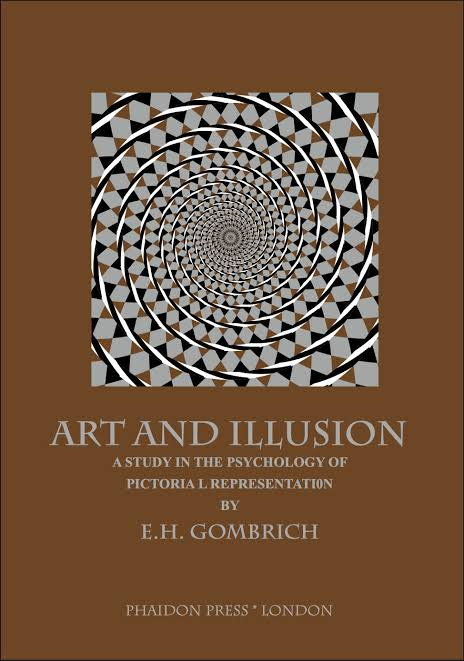
Gombrich is writing about painters, but he proposes this notion of the beholder’s share: the shared work of creation between the artist and the viewer in making an image and drawing out all of its associations. The painter makes a stroke on the canvas, and it’s up to the beholder to interpret that stroke. The painter who works with subtlety, restraint, and allusion is often the one who deepens interest, affection, and reward with his or her beholder.
Praising the artist capable of such visual subtlety, Gombrich writes:
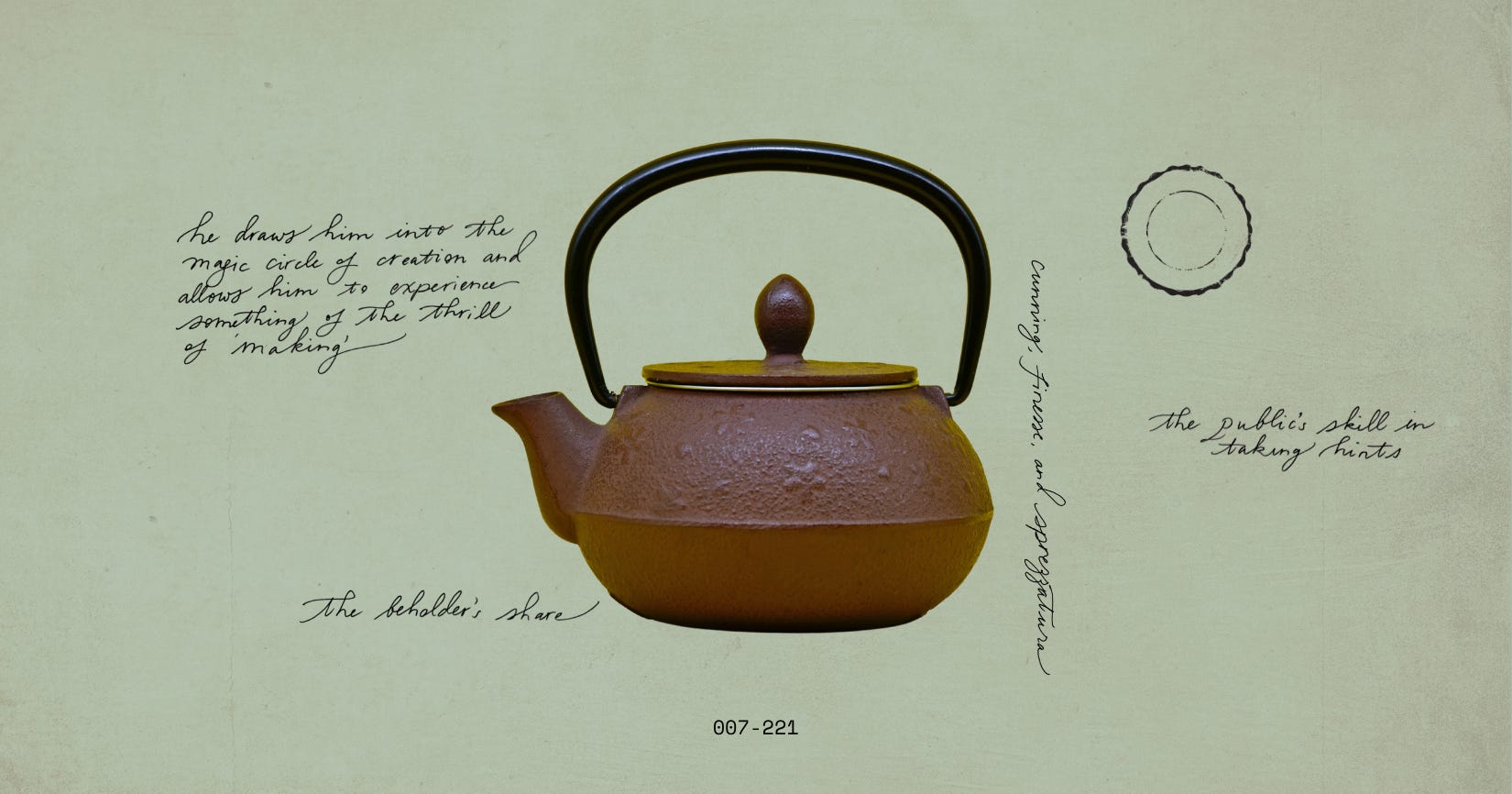
“The artist gives the beholder increasingly ‘more to do,’ he draws him into the magic circle of creation and allows him to experience something of the thrill of ‘making’ which had once been the privilege of the artist.
We’re not artists, but we think we have something to learn from these painters, who must produce work in which “the painter’s skill in suggesting must be matched by the public’s skill in taking hints” (Gombrich, again).
This invitation from Gombrich strikes a chord within us. Great design brings the reader into the act of creation. And such work demands cunning, finesse, and sprezzatura.
Will our readers get every hint? No, of course not. But for the ones who do, the reward is sweet.
Related
“Arrows Along the Way,” Greg Breeding on Gestalt
ENTRY: 007
SOURCES: Mike Ryan; Ernst Gombrich, Art and Illusion; Greg Breeding
Wonderful stuff. Just what I need. Tks.